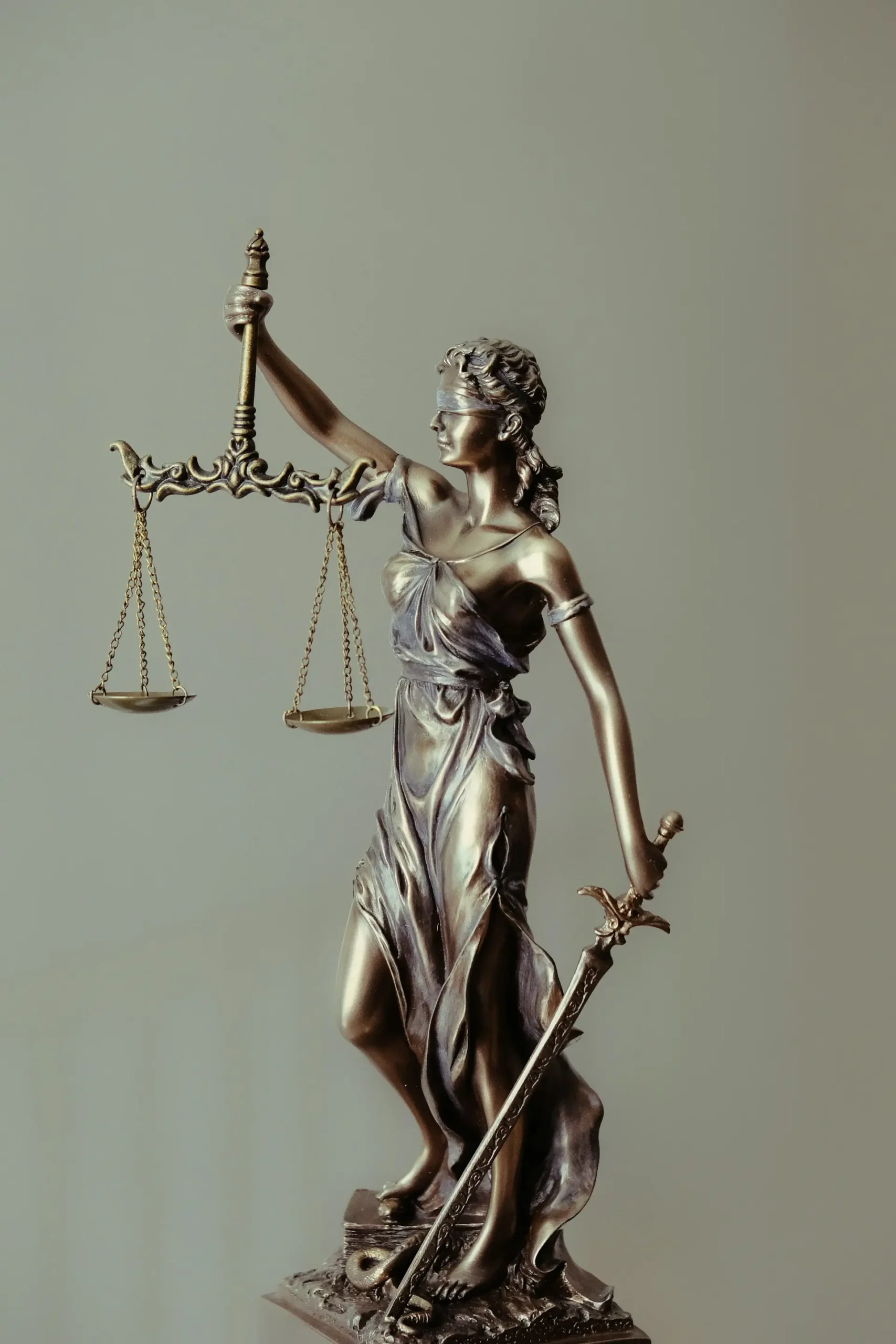
Legal Notices & Agreement Drafting

Precision in Words, Power in Law

In today’s fast-paced business as well as personal life, the robustness of your legal papers determines the robustness of your rights. Whether it is preparing an airtight agreement, serving a legal notice, or replying to one, each sentence matters legally. A shabbily prepared document can result in controversies, losses, or even long-term litigation. That is why it is imperative that you have professionals who understand the law not only but also understand how to implement it in a practical manner. 

At Legallyne, we offer Legal Notices & Agreement Drafting to protect your interests. With our process being overseen by retired judges we ensure that your documents are accurate, enforceable, and customized to your specific requirements.

Why Choose Us?

At Legallyne, we stand out because:

You will consult with seasoned retired judges who have reviewed countless legal notices and contracts, bringing unmatched insight into how courts interpret and enforce legal documents.

Our retired judges understand exactly how courts interpret notices and agreements, ensuring every document is crafted with legal precision. Each notice or agreement is tailored to your specific needs, drafted to hold strong in court and minimize future disputes. We focus on preventive legal tactics, helping you stay protected before conflicts arise. With transparent pricing and professional service, you always know what to expect—no hidden costs, just reliable legal support.

What is Legal Notices & Agreement Drafting?

Legal Notice: A written formal notice dispatched to a party to convey a legal obligation or request, usually a condition precedent to the institution of a case (e.g., cheque bounce, property disputes, termination of employment). Agreement Drafting: Drafting contracts or agreements between parties to document rights, obligations, and remedies (e.g., business contracts, partnership deeds, employment contracts, rental agreements, NDAs).

At Legallyne, we create legally binding, court-approved, and future-proof documents to prevent unnecessary court cases.

Eligibility for Legal Notices & Agreement Drafting in India

Companies – Vendor agreement, partnership agreement, employment agreement.
Individuals – Property agreement, rent/lease deed, settlement deed.
Startups – Founders' agreement, shareholders' agreement, NDAs.
Disputes – For individuals requiring notices in the event of cheque bounce, recovery of dues, or default of contract.
Organizations – Corporate policy, compliance agreement, and service agreement.

Step-by-Step Process

Step 1

Consultation

Comprehension of your scenario, goals, and possible risks.

Step 2

Document Review/Requirement Gathering

Gathering pertinent information and available drafts if any.

Step 3

Drafting

Formulating accurate, legally appropriate notices or agreements.

Step 4

Client Review

Reviewing the draft, clarifying doubts, and polishing.

Step 5

Finalization

Serving the legal notice or signing the agreement.

Step 6

Follow-Up Support

Advice on the next step, such as filing with the court or compliance where necessary.

Documents Required

Identity & Address Proofs of parties involved
Details of transaction/relationship (business, property, etc.)
Relevant agreements, invoices, or previous communications
Emails, letters, or payment proofs (in case of claims)
Property or business registration documents (if applicable)

Common Mistakes

Utilizing internet templates that lack vital legal clauses.
Vague or unclear language creating loopholes.
Not sending a legal notice prior to filing a case (compulsory under most laws).
Omitting jurisdiction clauses, which determine where disputes can be filed.
Not maintaining written evidence of communication such as acknowledgment of notices.

Recent Landmark Judgments

Naresh Pal Singh vs. Charu (Delhi, Apr. 30, 2025)

Court reaffirmed that legal notices dispatched via registered post to the correct address raise a strong presumption of service, which cannot be easily rebutted. Also, stopping payment does not nullify liability. Supreme Court (July 14, 2025): Held that partners of a firm—even if the firm itself is not named—can be prosecuted individually for cheque bounce offenses under Section 138 NI Act.

Kerala High Court (June 18, 2025)

Declared banks strictly liable for encashing cheques with forged signatures unless customer consent is proven. Banks must restore funds with interest.Allahabad High Court (2024): Ruled that legal demand notices sent via email or WhatsApp comply with Section 138 requirements—provided they align with IT Act norms.

Rajasthan High Court (2024)

Clarified that a cheque, even if issued without necessary licenses, triggers Section 139 presumption if dishonored, shifting the burden to the drawer.

Himachal Pradesh High Court (2025)

Reinforced that once issuance and dishonor of a cheque are established, the statutory reverse-onus under Section 139 applies automatically.

Myths vs Facts

Any paper-written agreement is enforceable in court.
Agreements need to have key clauses and signatures to be legally enforceable.
Legal notices can be communicated verbally or by email only.
Notices should be in proper legal forms and modes of delivery (usually via registered post).
Agreements do not require witnesses.
Various agreements need witnesses to make enforceability strong.
An informal WhatsApp message qualifies as a legal notice.
Courts tend to insist on formal, signed notices although electronic notices are accepted in certain situations.
General templates would suffice for all contracts.
Legal notices are not necessary prior to filing the case.
Agreements are necessary only for businesses.
Every agreement is specific; generic templates can lack important safeguards.
In most instances (such as cheque bounce under NI Act), notices are mandatory.
Even individuals (employees, freelancers, landlords) need legally valid agreements.

Frequently Asked Questions

Yes, in most situations (such as cheque bounce, consumer grievances, and breach of contract) it is obligatory under law.

Possible, but not advisable. Sloppily prepared agreements frequently result in disputes.

Usually 2–5 working days, subject to complexity.

Yes, the other party can react or challenge them, that's why accuracy in preparation is important.

Yes, according to the Information Technology Act, 2000, e-signatures are considered valid.

Client Testimonials

Call Now Button